
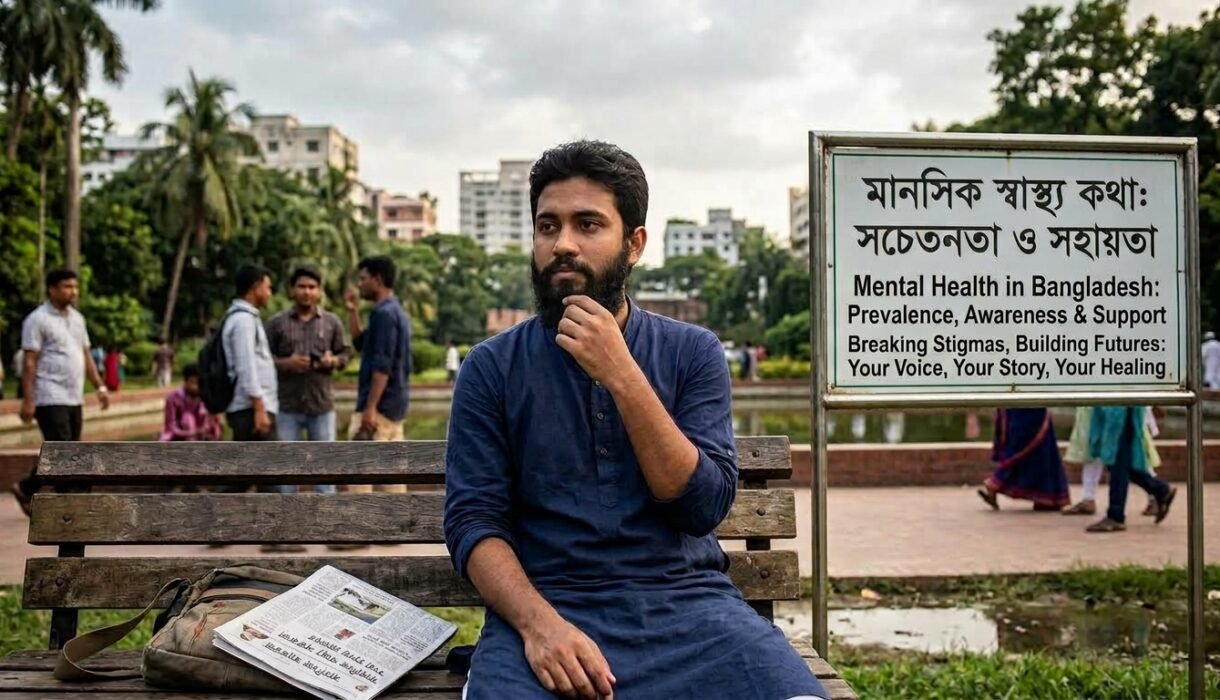
Mental Health in Bangladesh: Prevalence, Awareness & Support
Posted in :

Mental health is becoming one of the most important healthcare concerns in Bangladesh. While the demand for doctors, hospitals, and other healthcare services is increasing as the number of patients continues to grow, many people remain unaware of the importance of taking care of their mental health. Mental health is an essential part of overall health. However, many people in Bangladesh still focus mainly on their physical health while overlooking emotional, psychological, and behavioural well-being.
According to a nationwide community survey conducted in Bangladesh in 2019, 18.7% of adults aged 18 years and above were found to have a mental disorder. The study also found that the prevalence was 18.9% among people living in urban areas and 18.7% among people living in rural areas, showing that mental health problems are a concern across both urban and rural Bangladesh.
Mental Health Problems in Bangladesh
A significant number of people in Bangladesh experience depression, anxiety, stress, sleep-related difficulties, and other mental health disorders. The nationwide 2019 survey identified depressive disorders (6.7%) and anxiety disorders (4.7%) among the major psychiatric conditions affecting adults. The World Health Organization (WHO), based on Bangladesh’s National Mental Health Survey, has also highlighted the considerable burden of mental disorders in the country. WHO reported that 16.8% of adults were affected by mental disorders in the initial findings of the 2018–19 National Mental Health Survey.
Different studies can produce somewhat different percentages because of differences in methodology, diagnostic criteria, samples, and the populations studied. Therefore, these figures should be understood as estimates from specific surveys rather than an exact count of every person experiencing mental health difficulties in Bangladesh.
A Major Mental Health Treatment Gap
One of the biggest concerns is not only how many people experience mental health problems, but also how few receive appropriate professional support. The National Mental Health Survey reported that approximately 92.3% of adults with mental disorders did not receive treatment. For children, the treatment gap was reported at 94.5%. This means that a large proportion of people who may need mental health support are not receiving appropriate care. Lack of awareness, social stigma, misconceptions about mental illness, financial limitations, limited availability of professionals, and difficulties accessing mental healthcare can all contribute to this treatment gap.
Mental Health in Urban and Rural Bangladesh
Mental health problems affect people in both urban and rural communities. The nationwide 2019 study found 18.9% prevalence among urban adults and 18.7% among rural adults, with no significant difference between the two groups. This is important because mental health awareness should not focus only on major cities such as Dhaka. People living outside major urban centres also need access to reliable information, counselling, psychological services, psychiatric care, and other appropriate forms of mental health support. At the same time, access to services can differ significantly by location. Bangladesh has a limited number of mental health professionals relative to its population, and WHO has highlighted the shortage of specialist mental health services in the country.
Therefore, the challenge is not necessarily that rural communities have a higher overall prevalence of mental disorders. Rather, people in underserved communities may face greater barriers to receiving timely and appropriate mental healthcare.
What About Mental Health in Dhaka?
Dhaka is the country’s largest metropolitan center and has a greater concentration of healthcare facilities and mental health professionals than many other parts of Bangladesh. However, living in Dhaka does not mean that everyone has easy access to mental healthcare. Mental health problems are present among people from different social, educational, occupational, and economic backgrounds. Research has also examined mental health concerns among specific groups in Dhaka. For example, a study of school adolescents examined anxiety across urban, semi-urban, and rural areas around Dhaka, demonstrating that anxiety is an important concern across different types of communities.
Therefore, Dhaka also needs stronger mental health awareness, accessible professional services, early identification, and a culture where people feel comfortable seeking appropriate help.
Why Mental Health Is Often Neglected in Bangladesh?
Many people seek medical attention when they experience physical symptoms but may ignore psychological or emotional difficulties. A person may experience persistent sadness, excessive worry, anger, stress, sleep difficulties, loss of motivation, relationship problems, or difficulty functioning in everyday life but may not recognize these as signs that professional support could be helpful. Social stigma and misconceptions can make the situation even more difficult. Some people still believe that seeking psychological or psychiatric support means that someone is “weak,” “crazy,” or unable to handle life. These misconceptions can discourage people from seeking help. Mental health difficulties should instead be understood as health concerns that deserve appropriate attention, assessment, support, and treatment.
Mental and Physical Health Are Connected
Mental and physical health should not be treated as completely separate areas. Our psychological well-being can influence sleep, daily functioning, relationships, behavior, stress responses, and overall quality of life. At the same time, chronic physical illnesses and other health challenges can affect emotional and psychological well-being. This is why healthcare should take a more holistic approach that recognizes the relationship between mental, physical, emotional, and social well-being. Taking care of mental health does not mean ignoring physical health. Rather, both should receive appropriate attention.
When Should You Seek Mental Health Support?
People should consider seeking professional support when emotional or psychological difficulties become persistent or begin to interfere with everyday life.
Professional support may be appropriate when someone is experiencing:
- Persistent sadness or low mood
- Excessive worry or anxiety
- Long-term stress
- Difficulty managing emotions or anger
- Sleep-related difficulties
- Problems affecting studies or work
- Relationship or family difficulties
- Trauma-related psychological difficulties
- Significant changes in behavior or functioning
- Other emotional or psychological concerns
Depending on the person’s needs, appropriate support may involve a psychologist, clinical psychologist, psychotherapist, counsellor, psychiatrist, or other qualified mental health professional. A professional assessment can help determine what type of support or treatment may be appropriate.
Building a Mentally Healthier Bangladesh
It is high time for Bangladesh to give mental health the attention it deserves. We need greater mental health awareness not only in Dhaka and other major cities but also across rural and underserved communities. Families, educational institutions, workplaces, healthcare organizations, communities, and policymakers all have an important role to play. People should have access to reliable mental health information and should feel safe seeking professional support when they need it. Mental health is a part of health. Seeking professional support is not a sign of weakness rather it can be an important step toward better well-being and a healthier life.
At Sukoon Healthcare, we believe that mental health deserves the same attention and care as physical health. Through appropriate counselling, psychotherapy, psychosocial support, and other mental health services, individuals can receive professional support in understanding and managing their psychological and emotional difficulties.
Frequently Asked Questions
What percentage of people in Bangladesh have mental health disorders?
A nationwide community survey conducted in 2019 found that 18.7% of Bangladeshi adults aged 18 years and above had a mental disorder. The study reported 18.9% among urban adults and 18.7% among rural adults.
What is the prevalence of mental disorders in urban and rural Bangladesh?
The 2019 nationwide survey found 18.9% among urban adults and 18.7% among rural adults. The study found no significant difference between urban and rural residents.
How common are depression and anxiety in Bangladesh?
The 2019 nationwide survey reported 6.7% prevalence of depressive disorders and 4.7% prevalence of anxiety disorders among adults.
Do most people with mental health problems receive treatment in Bangladesh?
No. The National Mental Health Survey reported that approximately 92.3% of adults and 94.5% of children with mental disorders did not receive treatment.
Where can I get mental health support in Bangladesh?
Depending on the nature and severity of the concern, people may seek support from qualified psychologists, clinical psychologists, psychotherapists, counsellors, psychiatrists, or other appropriate mental health professionals.
References:
- World Health Organization (WHO) Bangladesh. Minister of Health releases first findings of National Mental Health Survey. 27 November 2019. The survey was conducted by the National Institute of Mental Health with technical support from WHO. (World Health Organization)
- World Health Organization (WHO). mhGAP Intervention Guide for mental, neurological and substance use disorders in non-specialized health settings — Bangladesh Version. WHO Bangladesh. (World Health Organization)
- Community prevalence of psychiatric disorders: Findings from a nationwide survey in Bangladesh. Nationwide household survey of 7,270 adults conducted in 2019; published in Asian Journal of Psychiatry. The study reported 18.7% overall prevalence, 18.9% urban and 18.7% rural. (PubMed)
- The current state of mental healthcare in Bangladesh: Part 1 — an updated country profile. BJPsych International / PMC. The review summarizes national mental-health prevalence and the development of mental healthcare services in Bangladesh. (PubMed Central (PMC))